Dental Implants in London: Specialist-Led, Under One Roof

Our London clinic provides Dental Implants planned and placed by Dr Opeoluwa Sodeinde, a GDC-registered specialist periodontist (No. 104071). Dr Sodeinde holds an MSc in Restorative Dentistry from Newcastle University alongside his periodontology and implantology training, and manages both the surgical placement in the bone and the design of the final tooth. We treat everything from a single missing tooth to full arch restorations at one practice. Book your £195 implant consultation to receive a written plan and itemised quote.

£195 consultationStraumann implantsGDC No: 10407110-year implant warranty
★★★★★4.9 across 269 Google reviews
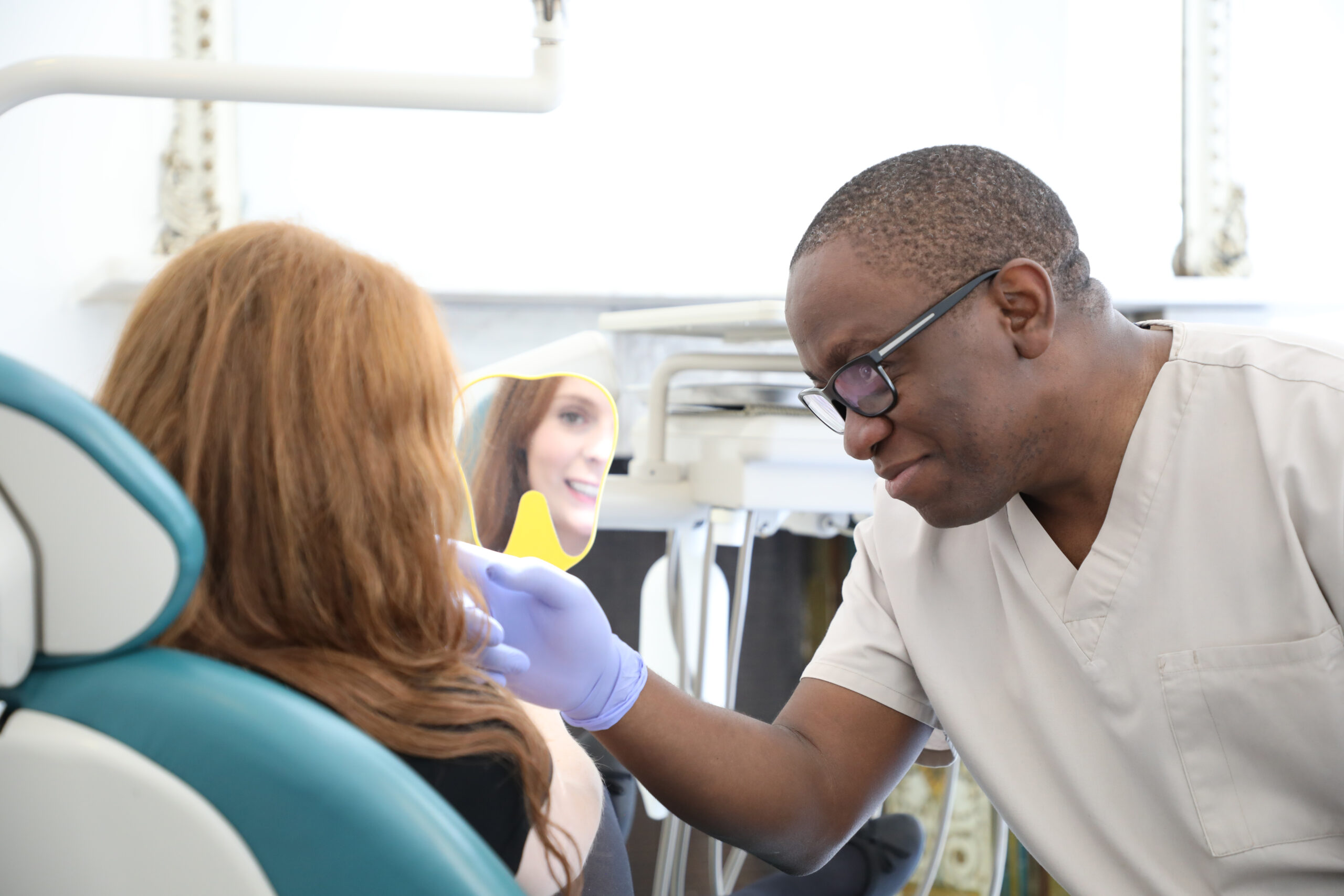
Dr Opeoluwa Sodeinde showing a patient her completed dental implants at London Dental Specialists

Dental Implants and How They Help

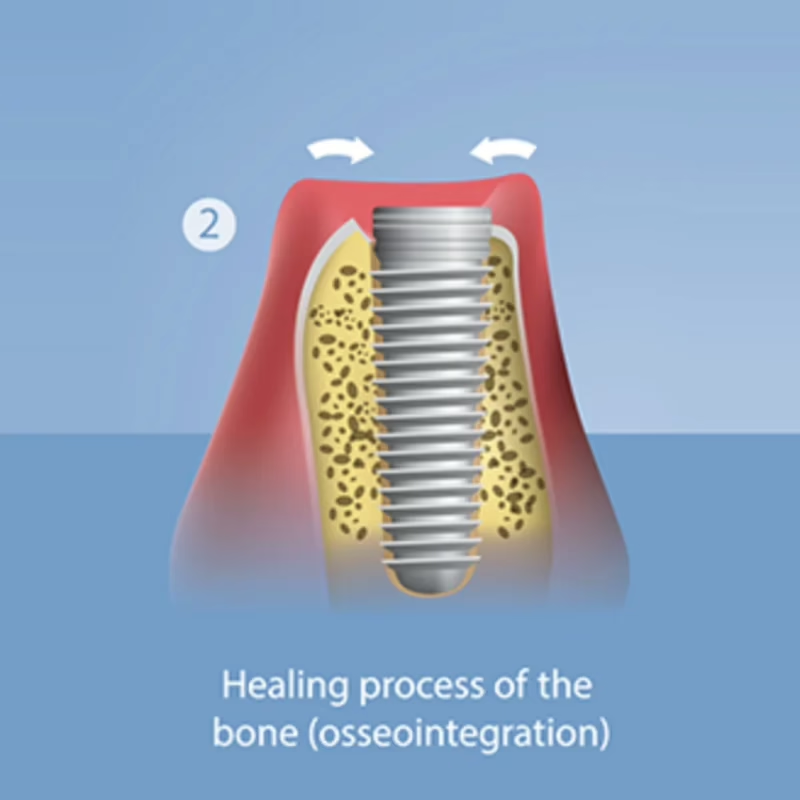
A titanium fixture acts as an artificial root, fusing with the jawbone through a biological process called osseointegration. This is fusion. This stable base supports an abutment and a custom crown to restore full chewing function. London Dental Specialists's implant service uses 3D CBCT imaging to map your anatomy before surgery begins.

They provide bone loss prevention by stimulating the jawbone in a way that bridges or dentures cannot.
A single implant avoids the need to grind down healthy adjacent teeth, which is often required for a bridge vs implant choice.
Our consultant-level specialists use computer-guided surgery to place fixtures with high precision.
Patients with insufficient bone density can access bone and soft-tissue grafting to make implantation possible.

Published studies report implant survival above 95% over ten years. This is well documented. You can book a consultation to determine whether you are suitable for dental implants.

Real Before and After Results

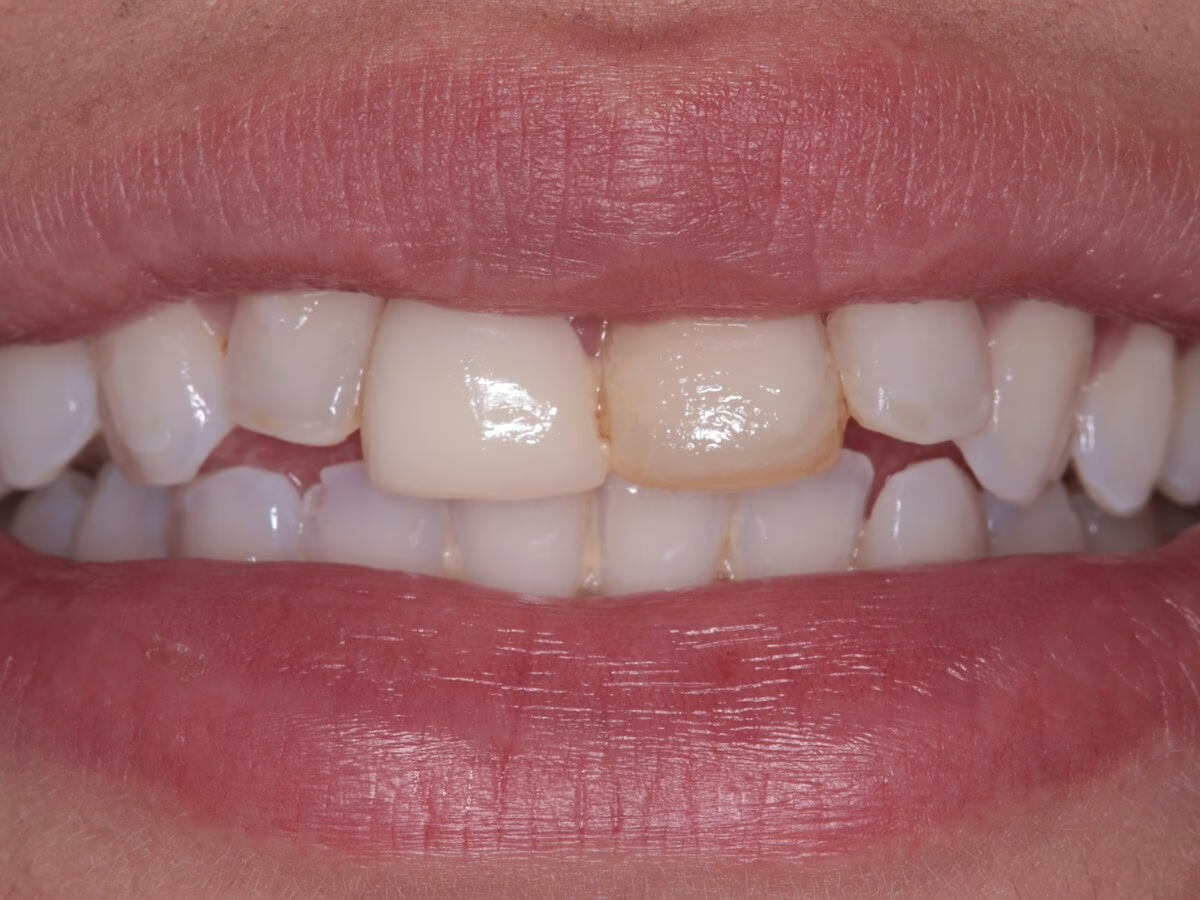
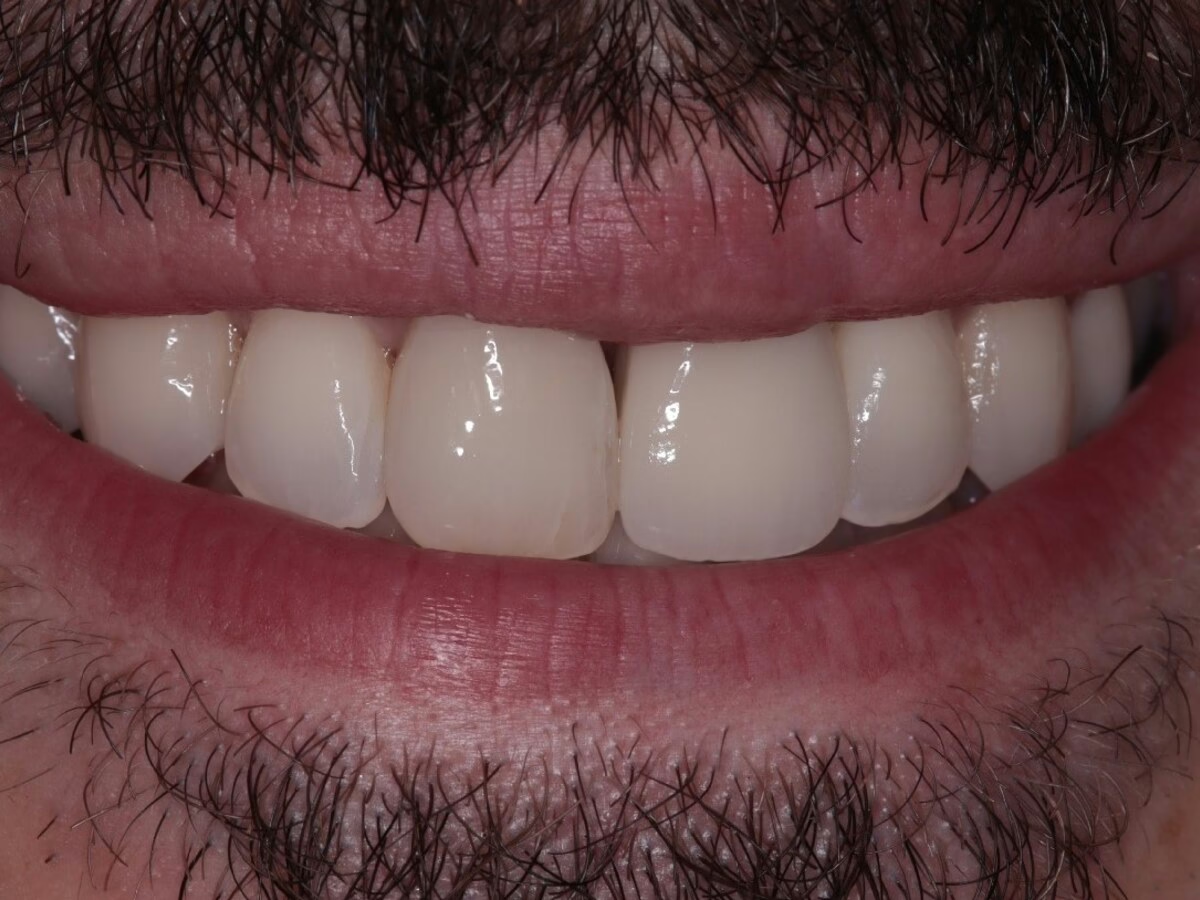
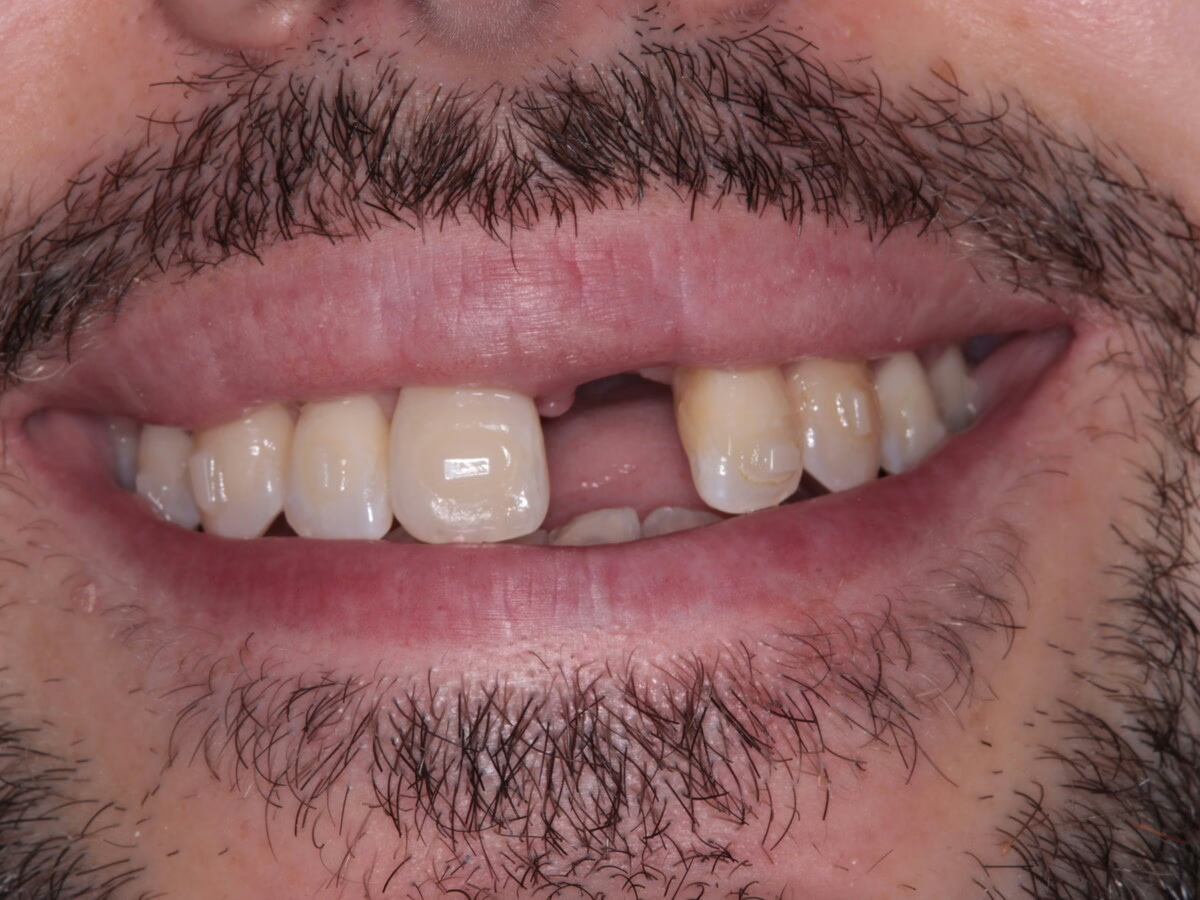
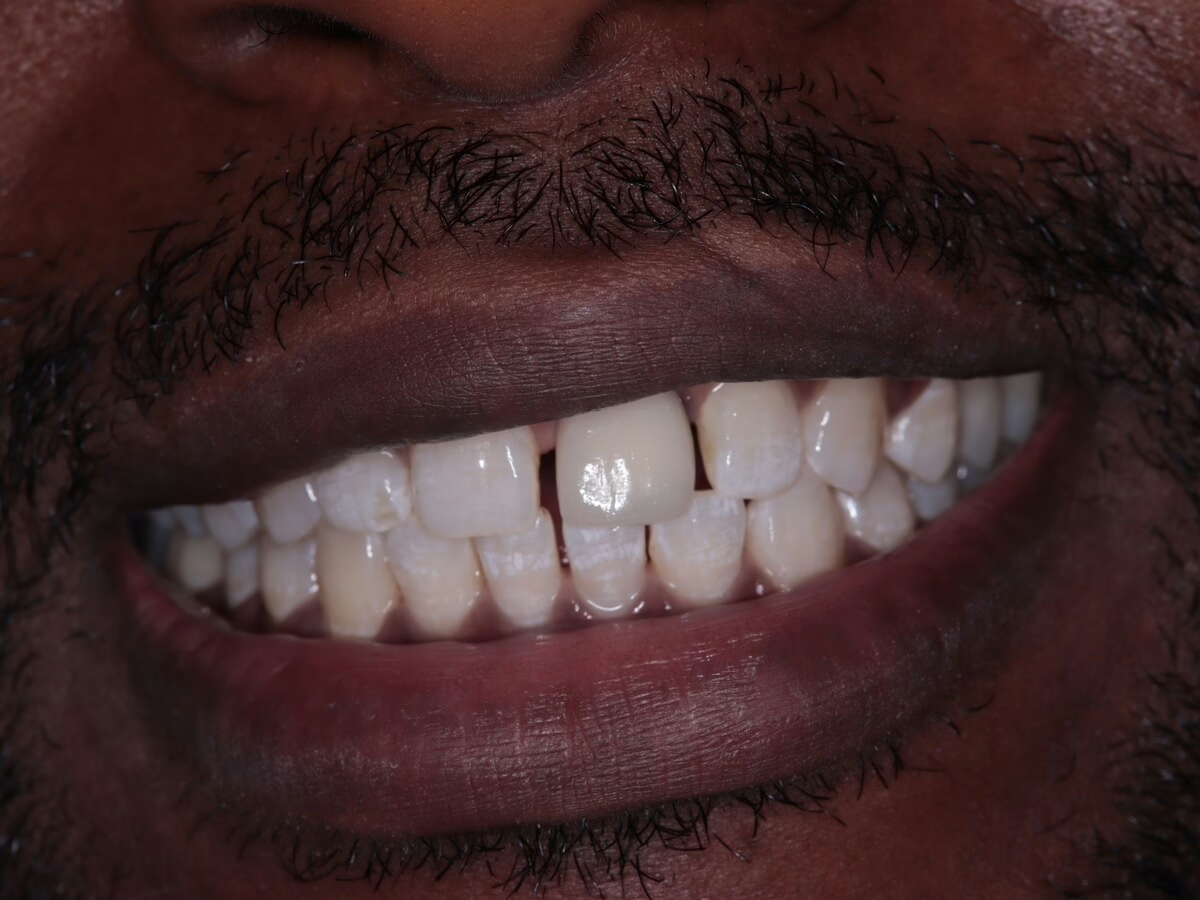
Drag the handle on each photo to compare. These are real patients treated at this practice with dental implants.

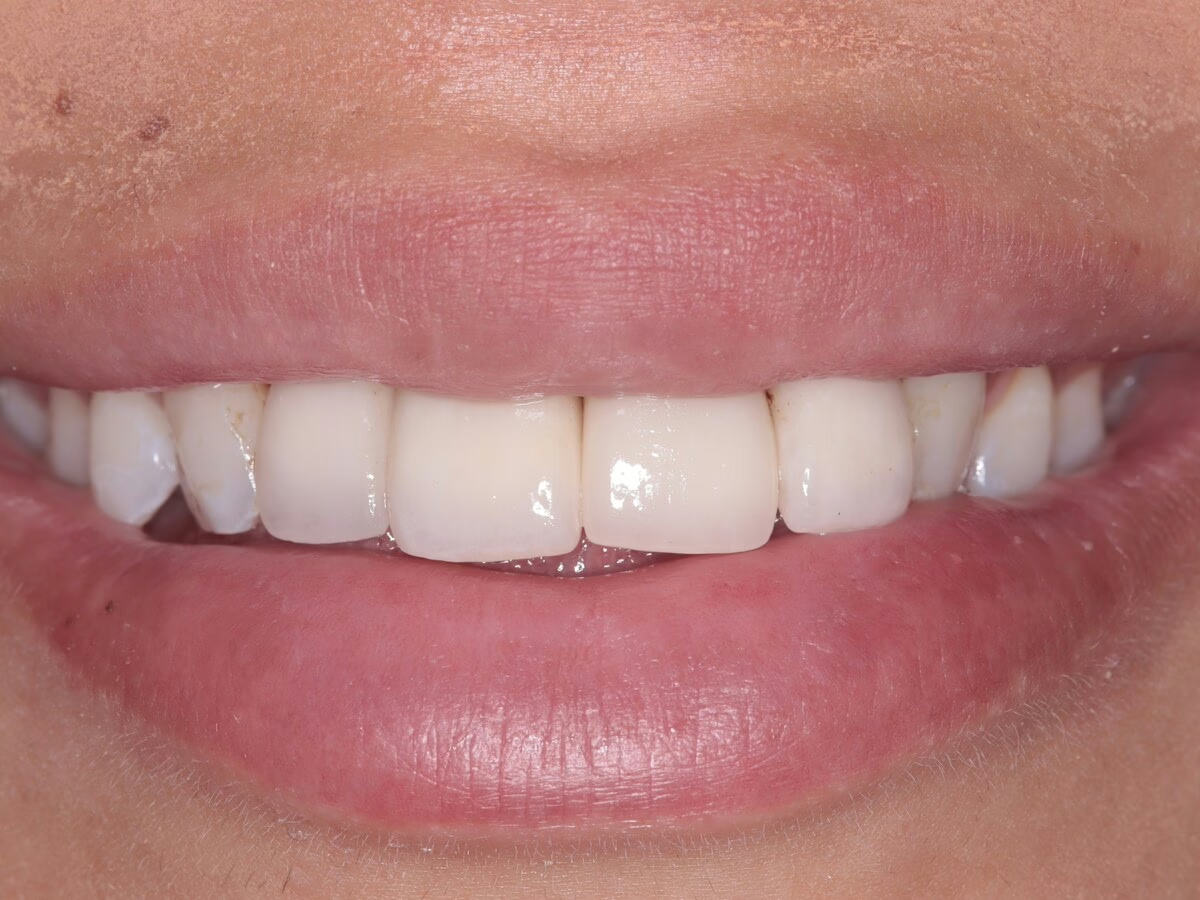
After dental implant treatment, case 1: a discoloured, uneven front tooth restored to an even, natural smile
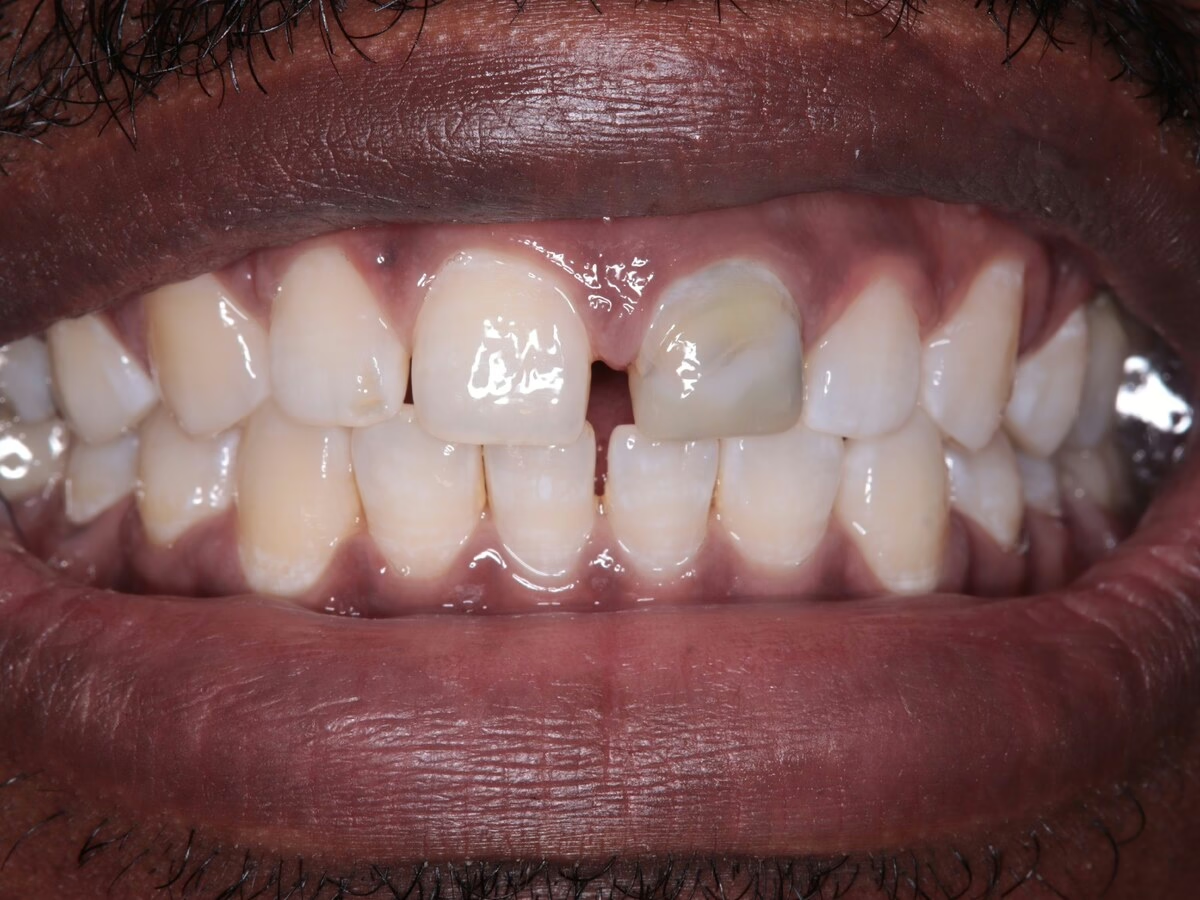
Before dental implant treatment, case 1
BeforeAfter

Case 1 · A discoloured, uneven front tooth restored to an even, natural smile

After dental implant treatment, case 2: a missing front tooth replaced with a dental implant
Before dental implant treatment, case 2
BeforeAfter

Case 2 · A missing front tooth replaced with a dental implant

After dental implant treatment, case 3: a damaged front tooth and gap restored to a clean, natural smile
Before dental implant treatment, case 3
BeforeAfter

Case 3 · A damaged front tooth and gap restored to a clean, natural smile

Real patients of London Dental Specialists, shown with consent. Cases are anonymised. Individual results vary.

Separator

Get Started with Dental Implants

Ready to take the next step with dental implants?

Please feel welcome to reach out, and we will be happy to welcome you and guide you to what dental treatments are best for you.

Welcome to London Dental Specialists

Meet the team at London Dental Specialists.

Prefer to talk it through first? Call us on 07700 100779 and the team will answer your questions.

London Dental Specialists111 Regent’s Park Rd, London NW1 8UR

Our Types of Dental Implants

The number of teeth you have lost determines the structure of your treatment. Our specialist selects the fixture and crown configuration from your CBCT scan, so every option below is planned against your own bone volume and gap size.

One missing tooth, or a few

A single implant carries one crown. Several gaps can be closed with individual implants, or with an implant-supported bridge that replaces a row of teeth on two fixtures.

A full arch

Full mouth dental implants replace every tooth in the upper or lower jaw. Most full-arch cases use four to eight fixtures per jaw: All-on-4 dental implants where bone volume allows, All-on-6 or All-on-8 where the bite needs more support, and All-on-X where your anatomy decides the count. Implant-supported dentures secure a removable denture on two or more fixtures.

A tooth on the same day

Same-day dental implants place the fixture and a temporary tooth in one visit, where bone quality supports immediate loading.

Complex anatomy

Zygomatic and pterygoid implants anchor in the cheekbone when the upper jaw has lost too much bone for standard fixtures. Mini implants suit narrow ridges and denture stabilisation.

Candidacy and comparison detail for every option sits on our dental implant types page.

A few terms you will meet while researching: implants placed within the jawbone are endosteal implants, the standard of care and the type we place. Subperiosteal implants, which rest on top of the jawbone under the gum, are reserved for rare cases where bone height is severely limited. Where several adjacent teeth are missing, an implant-supported bridge lets two implants carry a three-tooth restoration, so not every missing tooth needs its own implant. And for loose dentures, two to four implants fitted with retaining attachments allow a removable implant-supported overdenture to snap securely into place; you still take it out for cleaning.

Supporting Treatments That Make Implants Possible

Successful placement depends on sufficient bone volume and healthy gum tissues to support the fixture. 3D CBCT imaging allows our specialists to map your anatomy precisely and determine if preparatory work is required before surgery.

  • Bone grafting for implants restores jaw density using autografts, allografts, or xenografts.
  • Sinus lift surgery increases bone height in the upper jaw by elevating the sinus membrane.
  • Ridge augmentation widens the jawbone where there is not enough bone to stabilise a fixture.
  • Nerve repositioning moves sensitive nerves to create a safe space for the implant.
  • Sedation helps anxious patients.
  • CBCT scanning provides the high-resolution data needed for computer-guided implant surgery.
  • Tooth extraction removes damaged teeth to clear the site for a new fixture.
  • Gums must be healthy first.
  • Socket preservation places a bone substitute into the socket immediately after an extraction, protecting ridge volume for a later implant.
  • Guided bone regeneration covers a graft with a barrier membrane, so new bone can rebuild without soft tissue growing into the space.
  • Where the gum itself is thin, a connective tissue graft taken from the palate thickens the tissue around an implant and improves the gum contour.
  • Platelet-rich plasma and concentrated growth factors, prepared from your own blood, can be used alongside grafting to support healing.
  • Sedation options include inhalation sedation (nitrous oxide), oral sedation and intravenous (IV) sedation, with general anaesthesia available for complex cases: see sedation dentistry.

Managing these preparatory stages requires a specific skill set. Dr Opeoluwa Sodeinde is a specialist periodontist (GDC No. 104071), a legally protected title in the UK that confirms he has completed GDC-approved specialist training in gum and bone health. He also holds an MSc in Restorative Dentistry. So he handles both the surgical bone graft and the final design of the tooth. This dual training means the clinician who prepares the site also engineers the crown, ensuring the final restoration fits the biological foundation perfectly.

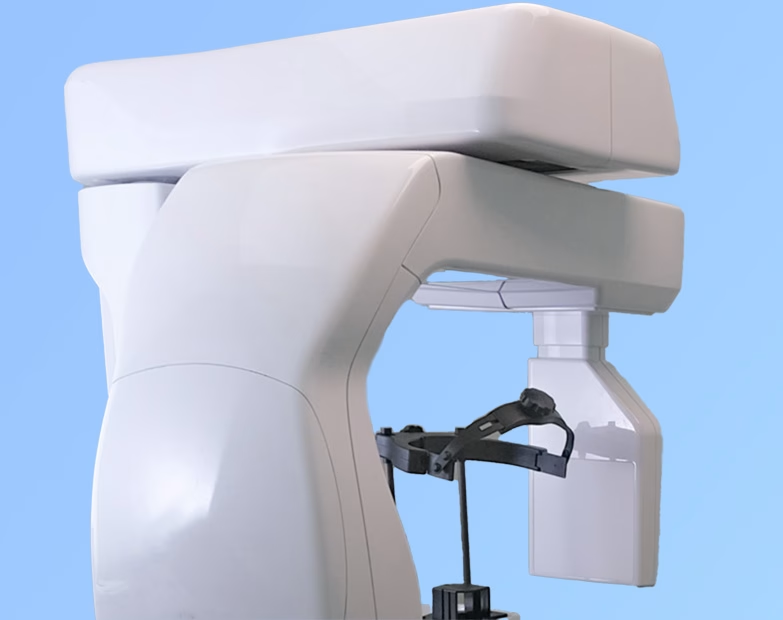
Cone beam CT (CBCT) scanner used to map bone volume before implant surgery
The CBCT scanner used to map bone, nerves and sinuses before any decision is made.

Our Process for Dental Implants

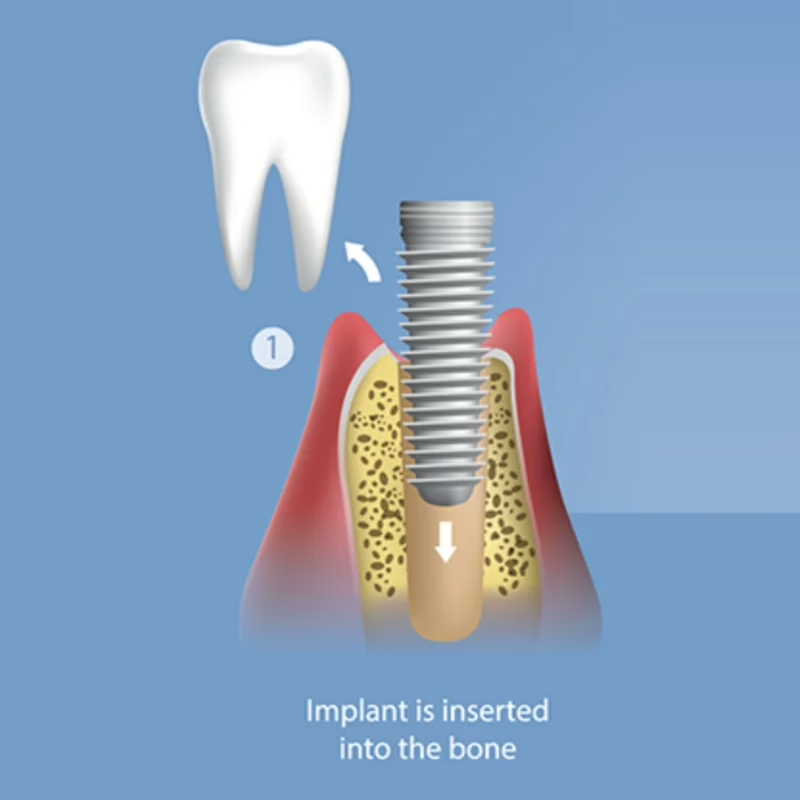
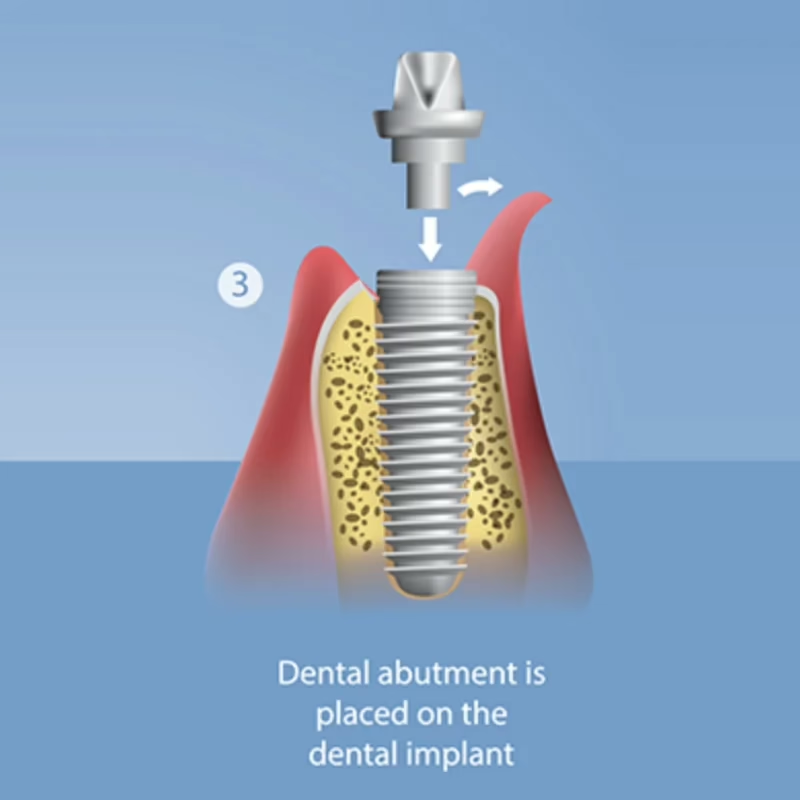
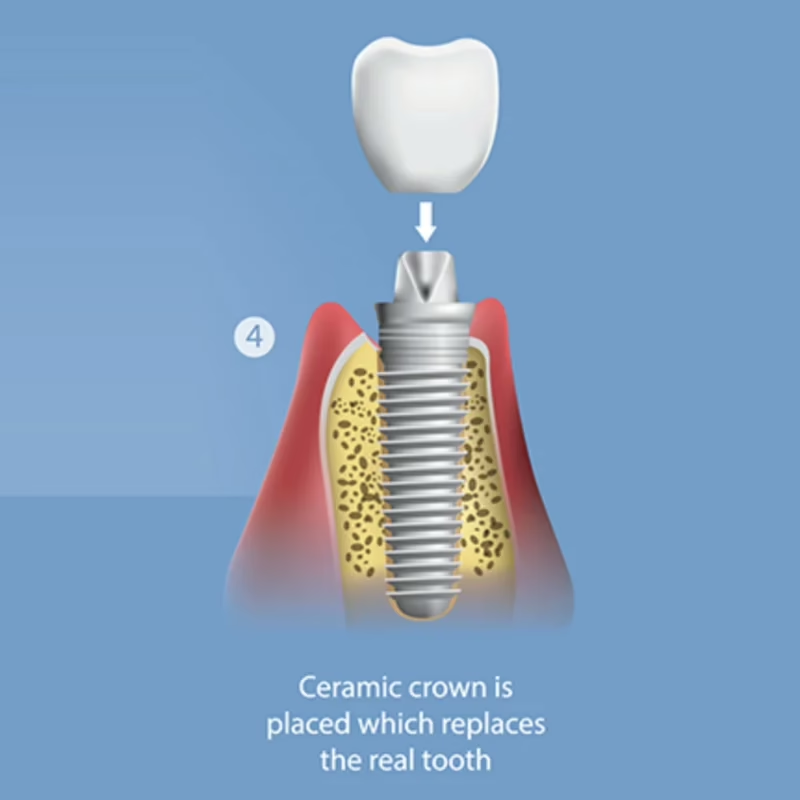
Step 1: the implant is inserted into the boneStep 2: the bone heals around the implant (osseointegration)Step 3: the abutment is placed on the dental implantStep 4: the ceramic crown is placed, replacing the real tooth
Initial consultation and assessment

Dr Opeoluwa Sodeinde reviews your clinical history and performs a physical examination to determine if you are a candidate for implants.

Digital imaging and planning

We use CBCT to create a high-resolution 3D map of your jaw, which forms the basis of your bespoke treatment plan.

Surgical placement of the fixture

Using computer-guided surgery, the Straumann implant is placed with precision into the bone to ensure optimal stability.

Site recovery and healing

If you have been told you have insufficient bone, we perform bone or soft-tissue grafting to create a stable foundation before or during placement.

Osseointegration period

The titanium fixture fuses with the jawbone over several months, a biological bond that supports survival rates above 95% over 10 years in published studies.

Crown restoration

The final tooth is engineered and fitted, completing the process with a restoration designed to match your natural bite.

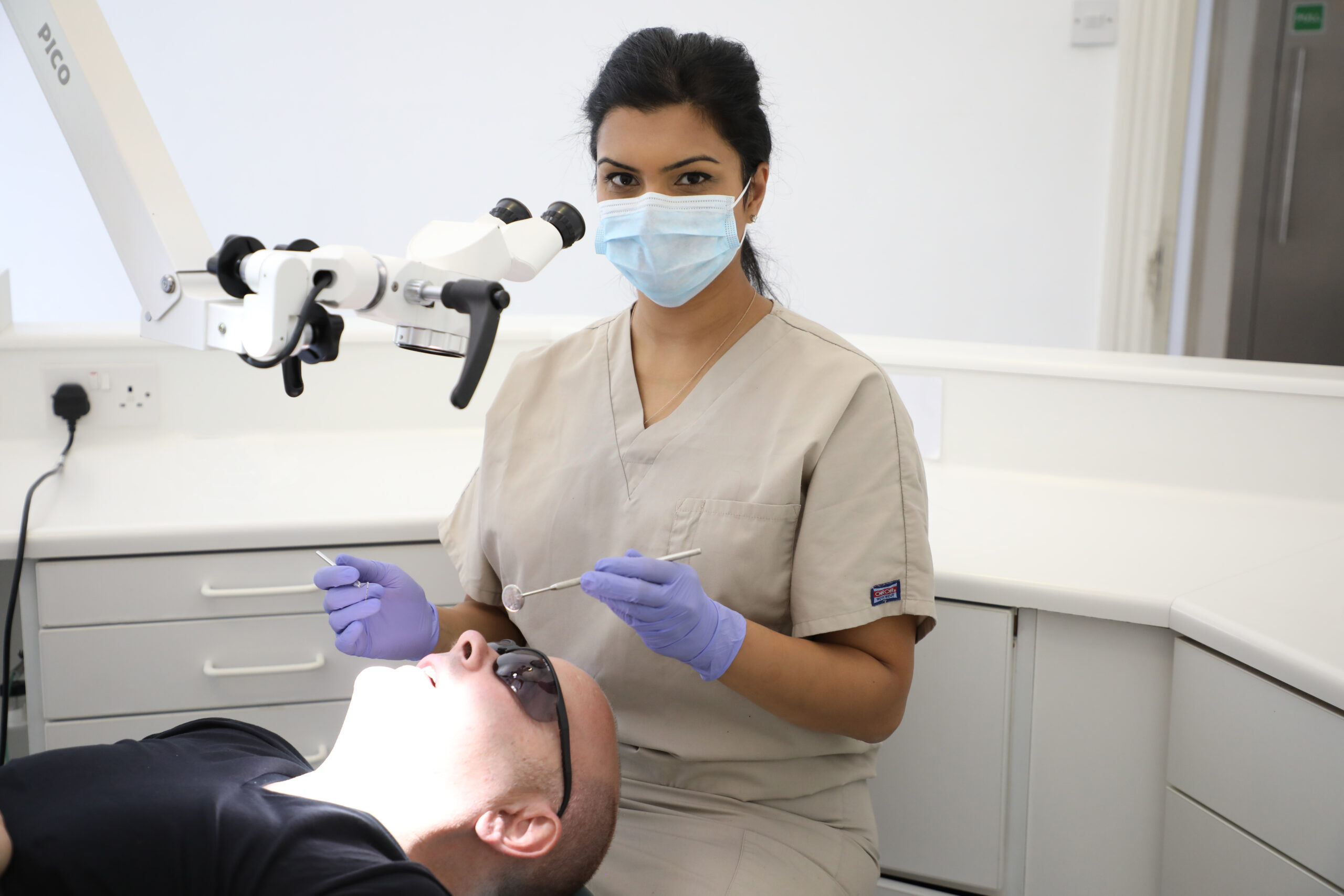
Specialist treating a patient under the operating microscope at London Dental Specialists
Treatment in progress at the practice.

London Dental Specialists's implant process is managed by a clinician with a dual qualification in periodontics and restorative dentistry. This means Dr Sodeinde (GDC No. 104071) is a specialist periodontist who also holds the training to design the final crown, ensuring the surgical placement aligns with the mechanical needs of the tooth. For a more detailed look at each stage, you can read the dental implant procedure step by step.

Planning is digital from end to end. Your CBCT scan is combined with a digital impression from an intraoral scanner, the implant position is simulated in planning software, and a surgical guide controls the planned angle and depth on the day. After the bone has integrated, the abutment, the connector that joins the implant to the tooth, is fitted, and the final crown is shaped and shaded to match the surrounding teeth.

Not sure where you fit in this process?

Start with the £195 specialist consultation: a written plan and an itemised quote before you commit to anything.

Dental Implants

Your Dental Implant Team

Your implant care is led by Dr Opeoluwa Sodeinde, a GDC-registered Specialist in Periodontics, and supported by Dr Neha Patel, a GDC-registered Specialist in Endodontics. From single-tooth replacements to full-mouth reconstruction, you are treated by specialists at every step.

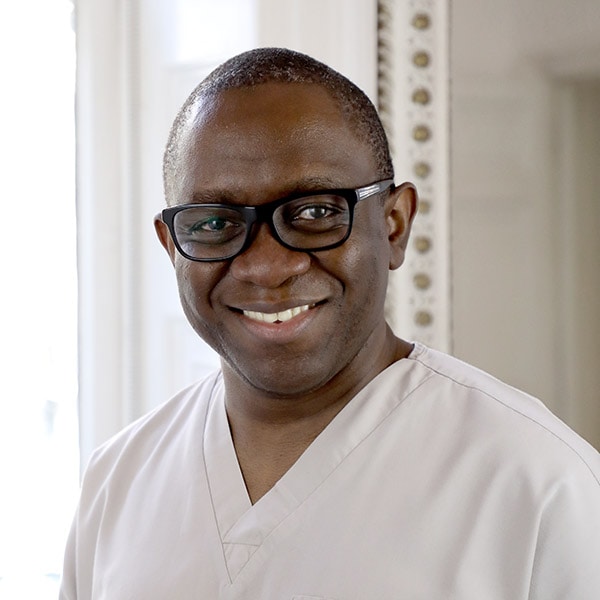
Dr Opeoluwa Sodeinde, Specialist in Periodontics
Implant Lead

Dr Opeoluwa Sodeinde

Principal Dentist, Specialist in Periodontics & Implantology

GDC Specialist in Periodontics GDC No. 104071 MSc Restorative Dentistry

Dr Opeoluwa Sodeinde, Principal Dentist and Specialist in Periodontics, brings exceptional expertise to dental implant procedures. His MSc in Restorative Dentistry from Newcastle University and MClinDent in Periodontics from King’s College London, alongside Membership in Periodontics from the Royal College of Surgeons of Edinburgh, equip him with advanced implant placement and gum management skills. His specialisation in periodontics is crucial for successful implant integration, ensuring proper gum health and bone support for reliable, long-lasting tooth replacement.

Certifications
  • Bachelor of Dental Surgery (BDS)
  • Membership of the Faculty of Dental Surgery, Royal College of Surgeons of Edinburgh (MFDS RCS(Ed))
  • Master of Science in Restorative Dentistry (MSc (Rest Dent))
  • Master of Clinical Dentistry in Periodontics (MClinDent (Perio))
  • Membership in Periodontics, Royal College of Surgeons of Edinburgh (MPerioRCS (Ed))
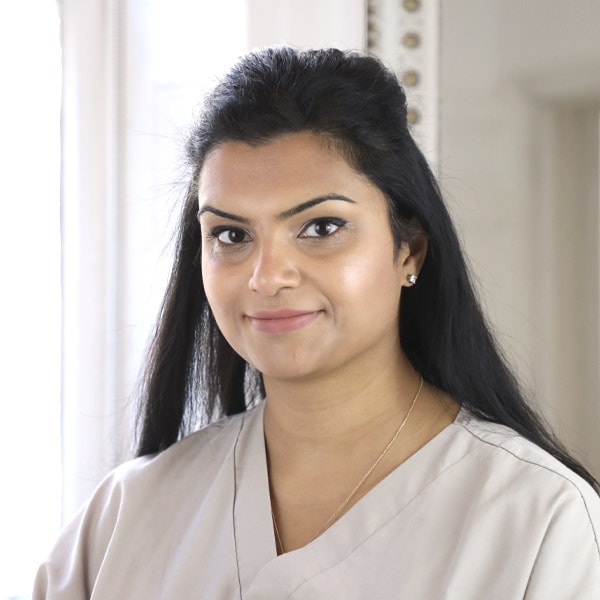
Dr Neha Patel, Specialist in Endodontics
Endodontic Support

Dr Neha Patel

Specialist in Endodontics

GDC Specialist in Endodontics GDC No. 150517 FHEA

Dr Neha Patel is a leading endodontics specialist at London Dental Specialists. With her BDS and MFDS RCS(Ed) qualifications, she excels in root canal treatments and tooth preservation. Her MClinDent in Endodontics and MEndo RCS from the Royal College of Surgeons of Edinburgh underscore her expertise in complex cases, protecting the teeth surrounding implant sites so patients keep as many natural teeth as possible.

Certifications
  • Bachelor of Dental Surgery (BDS)
  • Membership of the Faculty of Dental Surgery, Royal College of Surgeons of Edinburgh (MFDS RCS(Ed))
  • Fellow of the Higher Education Academy (FHEA)
  • Master of Clinical Dentistry in Endodontics (MClinDent (Endo))
  • Membership in Endodontics, Royal College of Surgeons of Edinburgh (MEndo RCS(Ed))

Specialist-led care across every discipline

London Dental Specialists brings together GDC-registered specialists in periodontics, endodontics and orthodontics, alongside dentists with special interests, dental therapists, hygienists and a dedicated clinical support team. Whatever your treatment, you are cared for by the right expert at every step.

Why Patients Choose This Practice

Specialist surgical and restorative planning

Patients benefit from a clinician who holds dual qualifications in periodontics and restorative dentistry. Dr Opeoluwa Sodeinde (GDC No. 104071) manages both the surgical placement in the bone and the engineering of the final crown. This means the person placing the implant also designs the tooth it carries. It's a rare combination that removes the need to coordinate between different providers for the surgical and aesthetic phases of treatment.

Precision through digital technology

London Dental Specialists's implant service uses 3D CBCT imaging to map jaw anatomy before surgery, and we employ 3D-guided protocols to ensure the fixture is placed in the optimal position for long-term stability. This digital precision is paired with bone and soft-tissue grafting for patients who lack the natural volume required for a stable implant, which allows for a predictable surgical path overall.

Verified clinical outcomes

Our clinic holds a 4.9 star rating based on 269 Google reviews from patients in London. We use Straumann as our primary implant system because of its documented reliability in clinical studies, and most patients find the process straightforward when led by consultant-level specialists who focus on evidence-based protocols to maintain the health of the surrounding gums. You can see the full range of the implant systems we place and compare their clinical track records.

We provide a 10-year warranty on the implant systems we place.

Feature Detail
Lead clinician Dr Opeoluwa Sodeinde (GDC No. 104071)
Imaging 3D CBCT imaging with 3D-guided placement protocols
Grafting options Bone and soft-tissue grafting
Implant system Straumann
Google rating 4.9 stars from 269 reviews
Warranty 10-year warranty on implant systems placed

Our Reviews

4.9★★★★★269 Google reviews
95%+10-year implant survival in published studies
10-yrimplant warranty in writing
GDCspecialist-registered clinicians, publicly checkable

Patients consistently rate London Dental Specialists's implant care with 4.9★ · 269 Google reviews. This feedback reflects the clinical precision of our consultant-level team. We use 3D CBCT imaging to map the jawbone before surgery. This ensures every Straumann fixture is placed with millimetre accuracy. Most patients find the process straightforward. It is a result of combining surgical expertise with a focus on the final aesthetic.

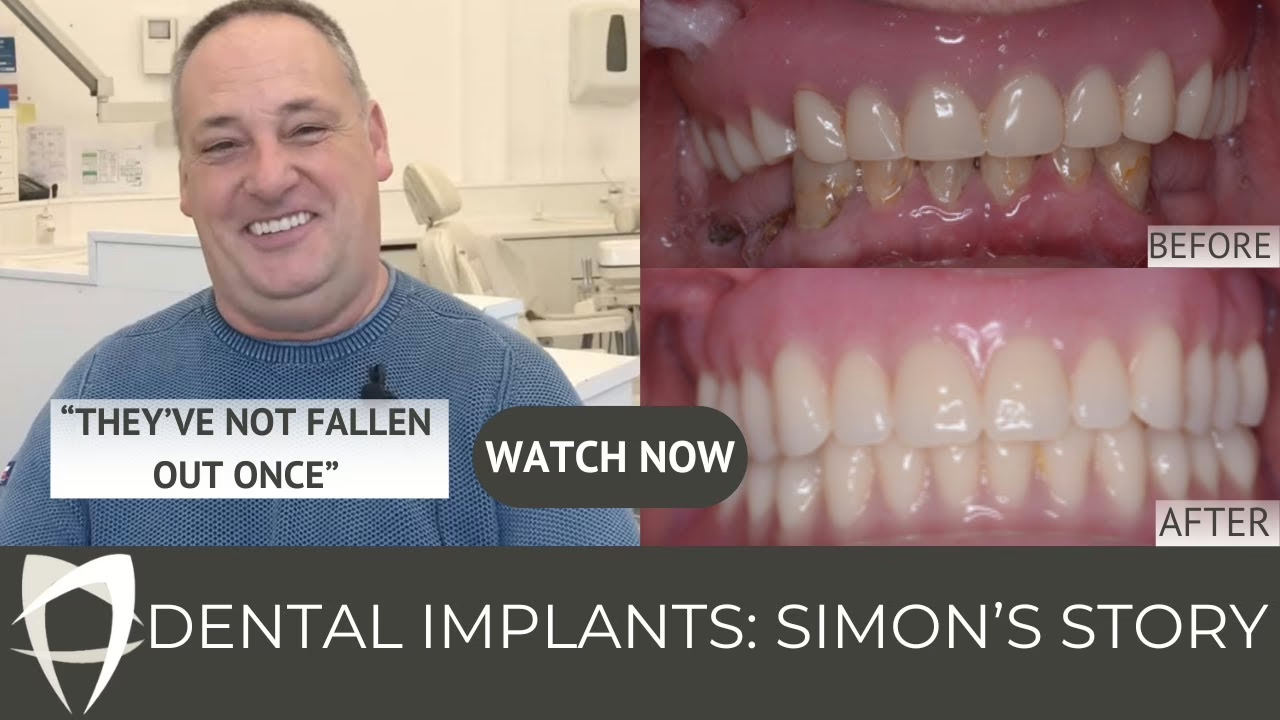
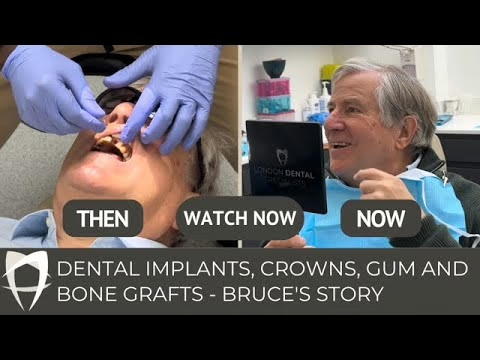
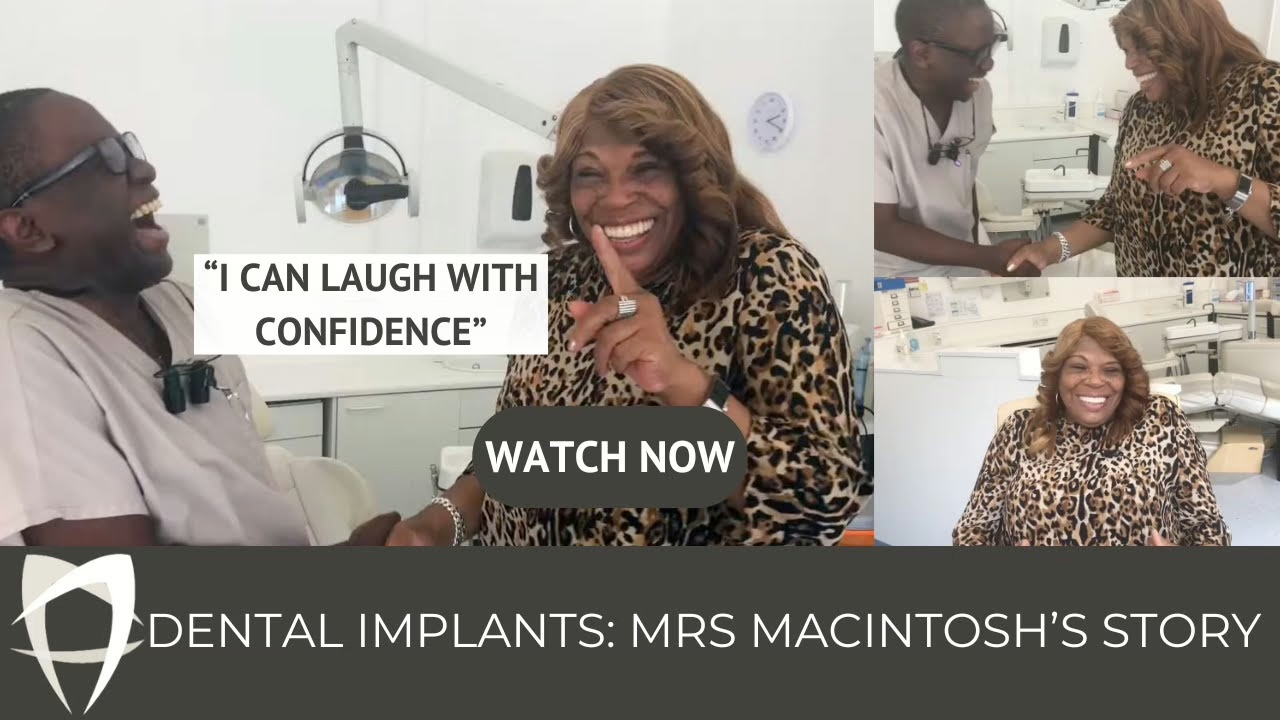
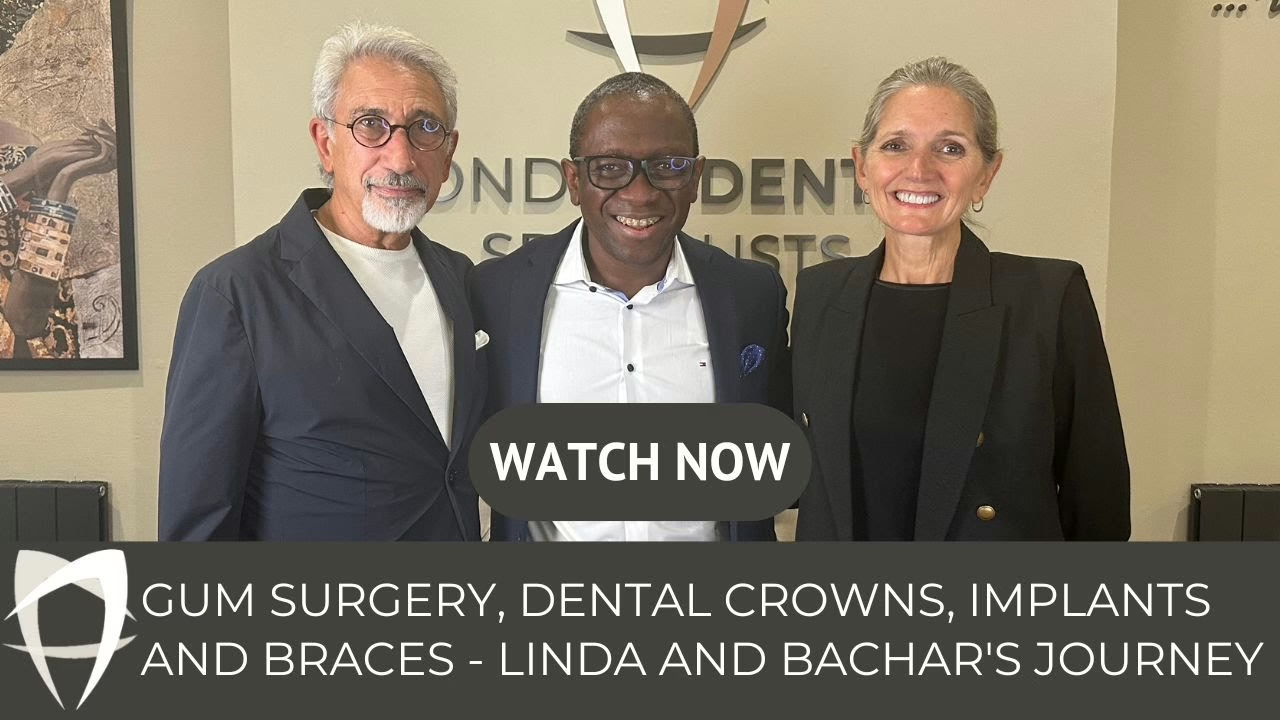
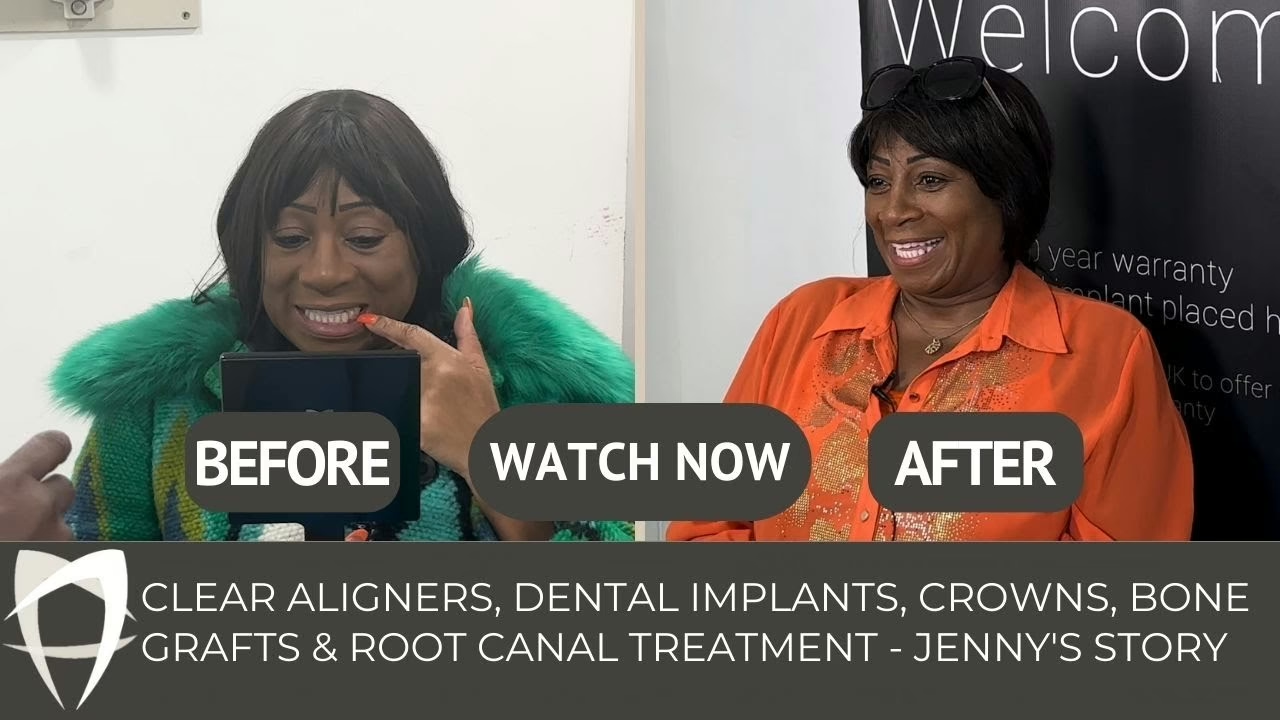
Watch more patient stories on our YouTube channel

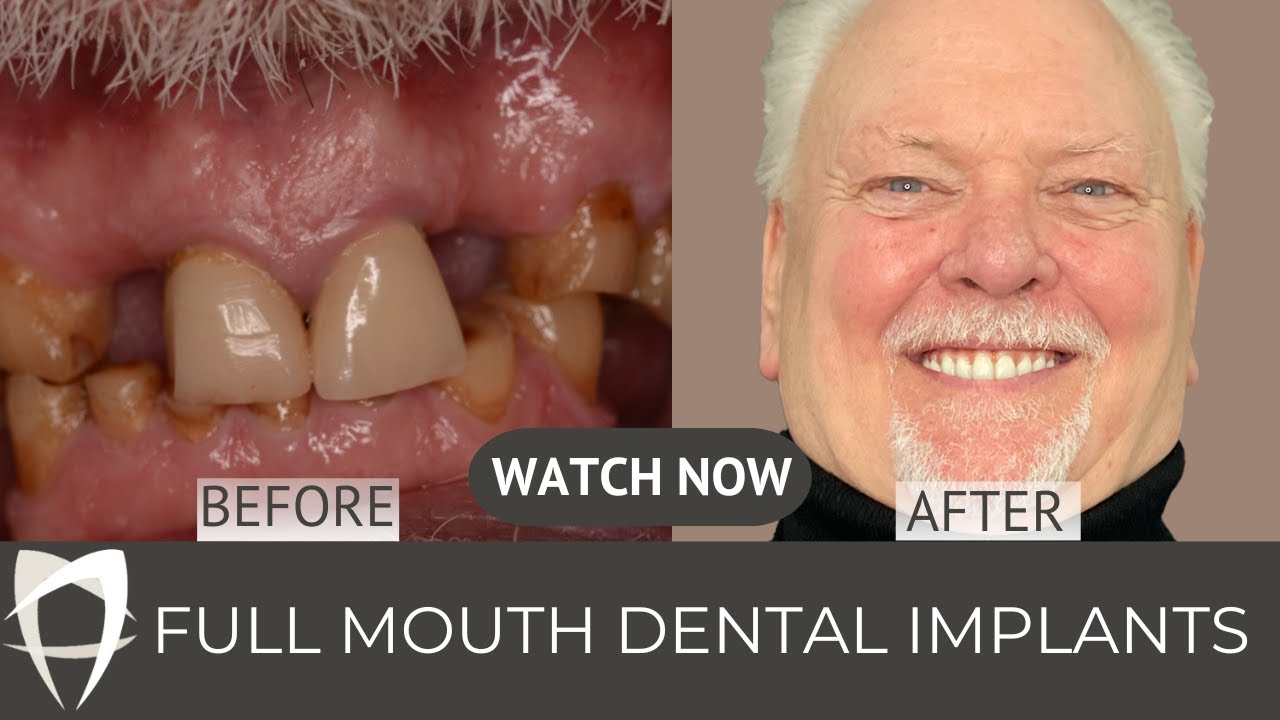
Before and after of Robert’s full mouth dental implant treatmentRobert’s full mouth implant journey

Watch a real patient go from failing teeth to a fixed full-arch result at this practice, and read how each stage was planned.

Read Robert’s story

These results stem from a rigorous clinical protocol. Dr Opeoluwa Sodeinde is a specialist periodontist registered with the GDC (No. 104071). This is a protected title in the UK. It means the clinician has completed approved specialist training to manage the gums and bone surrounding an implant. You can read more implant patient stories from this practice to see how we handle different clinical needs.

Separator

Dental Implants Costs

At London Dental Specialists we provide state-of-the-art dental implant solutions to replace missing teeth. Our implant treatments offer a permanent natural-looking solution that can restore both function and aesthetics. Each implant treatment is customized to your specific needs considering factors such as bone density number of missing teeth and desired outcome. Our experienced implantologists use the latest technology and premium materials to ensure optimal results. The cost of dental implants varies depending on several factors including:
  • Number of implants needed
  • Type of restoration (single crown, bridge or full arch)
  • Need for additional procedures (bone grafting, sinus lift)
  • Choice of materials
  • Complexity of the case
Dental Implants Services and Pricing
Service Cost Notes
Consultation £195 *The consultation process happens over 2 appointments. This fee covers the first appointment and the second complimentary appointment allows you to ask as many questions as you require before commencement of treatment. All x-rays that are taken in your mouth are also covered in the fee but x-rays taken outside the mouth (CT scans and OPGs) are not included.
Full mouth Implants £20,000-£26,000 per jaw Full mouth implants (This includes the costs of any CT scans, gum grafts, most bone grafts and 2 sets of teeth. Having a "spare set of teeth" makes maintenance very easy in the future)
Implant Dentures £10,000 - £15,000 Implant dentures (This includes new cosmetic upper and lower dentures and 3 implants in the lower jaw only. It also includes the cost of any CT scans, gum grafts and bone grafts)
Multiple Tooth Implants from £4,000 Multiple tooth implants (This includes the cost of any CT scans, gum grafts, most bone grafts, temporary and definitive teeth)
Single Tooth Implant from £4,250 Single tooth implant (This includes the cost of any CT scans, gum grafts, most bone grafts, temporary and definitive teeth)

Cost Factors

The cost of dental implant treatment varies significantly based on individual patient needs and treatment complexity. During your consultation, we perform detailed 3D imaging to assess bone quality and determine the most appropriate implant solution. We provide comprehensive treatment plans with transparent pricing and offer various financing options to make implant treatment more accessible.
  • Number of Implants Needed
  • Type of Restoration (single crown, bridge, or full arch)
  • Bone Quality and Need for Grafting
  • Implant Material and Brand
  • Need for Sinus Lift or Other Procedures
  • Type of Final Prosthetic
  • Complexity of Placement

Warranty Information

We offer patients a unique 10-year warranty on dental implants. If your implant (the screw in the bone) fails after the prosthesis (fixed teeth) has been placed, London Dental Specialists will ensure coverage of the rehabilitation treatment. During this period you will be regularly recalled for check-ups and hygienist visits allowing us to fully maintain your implants and your oral health. Terms and conditions:
  • 4 hygienist visits a year
  • 1 Dental health review
  • Well-controlled diabetes
  • No smoking
  • Medically fit and well
  • No bone conditions

For more information on our Dental Implants Warranty: Download our Dental Implants Warranty Guide in PDF Format

Insurance Information

Most dental insurance plans provide partial coverage for implant procedures. Coverage typically ranges from 50-80% depending on your specific plan. We work with all major insurance providers and can help verify your benefits before treatment begins. Many plans have annual maximums so we may recommend scheduling complex treatments across calendar years to maximize your benefits.

The £195 consultation fee is credited toward any treatment you go ahead with.

Problems with an existing implant?

Implants placed elsewhere are welcome here. If an implant has become painful, loose or swollen, the usual cause is peri-implantitis: a bacterial infection of the gum and bone around the implant that, left alone, leads to bone loss. As a specialist periodontist, Dr Opeoluwa Sodeinde treats failing implants directly, from deep cleaning of the implant surface through to laser decontamination and grafting bone around the affected implant.

Read about peri-implantitis treatment, the risks and complications of implants, and how long implants last. If an implant is troubling you now, call 07700 100779.

Frequently Asked Questions

Consultant-level specialists provide the answers below to help you understand the clinical requirements of implant dentistry. If you have specific health concerns, these details serve as a starting point for your £195 consultation.

How long do implants last?

Implant fixtures typically last 25+ years with regular maintenance, while the crowns attached to them usually require replacement every 10 to 15 years. Published studies show implant survival above 95% over a 10 year period.

ComponentTypical Lifespan
Implant fixture25+ years with regular maintenance
Crown10 to 15 years

Does it hurt during the procedure?

Many patients ask about discomfort before agreeing to treatment. Local anaesthesia ensures the area is numb during surgery, so you should not feel pain during the placement. Most patients report mild soreness for a few days afterward, which is typically managed with standard over-the-counter medication.

What happens if I have not enough bone?

Patients with insufficient bone volume may require bone and soft-tissue grafting to create a stable foundation. We use 3D CBCT imaging to map your anatomy and determine if a graft is necessary before placing a Straumann implant.

Is sedation available for anxious patients?

Given that some patients feel nervous about the procedure described above, we offer sedation options to help those who feel nervous about dental surgery. This allows you to remain relaxed while our team performs the procedure in a controlled, clinical environment. We provide inhalation sedation (nitrous oxide), oral sedation and intravenous (IV) sedation, and general anaesthesia can be arranged for complex cases. You can read more on our sedation dentistry page.

Who performs the surgery and the crown fitting?

Dr Opeoluwa Sodeinde handles both the surgical placement and the restorative design. As a specialist periodontist with additional training in restorative dentistry, he manages the entire process from the bone level to the final tooth shape.

How do you ensure the implant is placed accurately?

Because Dr Sodeinde oversees the full process from placement to final restoration, London Dental Specialists's implant service uses computer-guided implant surgery. This technology allows the clinician to plan the exact angle and depth of the fixture on a screen before the surgery begins.

Are same-day implants possible?

Depending on the bone assessment carried out during your CBCT scan, some patients qualify for same-day implant protocols where a temporary crown is fitted immediately. This depends entirely on the primary stability of the implant in your bone, which is assessed during the procedure.

What is the warranty on the implants?

We provide a 10-year warranty on the implants we place. This reflects our confidence in the Straumann system and the precision of our specialist-led protocols.

How can I verify the qualifications of my specialist?

The title of specialist periodontist is legally protected in the UK. You can verify Dr Sodeinde's status on the GDC Specialist Register.

Can you treat an implant that is already failing?

Yes. A painful, loose or swollen implant is usually a sign of peri-implantitis, an infection of the gum and bone around the implant. Our specialist periodontist treats failing implants, including implants placed at other practices, using deep cleaning, laser decontamination and bone grafting where needed. See our peri-implantitis treatment page.

Where to go next with your implant questions

Most people arrive with one of a handful of questions. Here is the shortest route to the answer you need.

When you are ready to put your own case in front of a specialist, book your implant consultation. Dr Opeoluwa Sodeinde holds a dual qualification in periodontics and restorative dentistry. This means the surgery in gum and bone and the engineering of the teeth are managed by one clinician. The implant is placed to support the final tooth's function. You can verify this level of training via GDC registration 104071.

If you have been told you may not have enough bone, or you simply want to know where you stand, start with whether you are suitable for dental implants.
Gum disease does not rule implants out. It has to be treated first: dental implants when you have gum disease.
Recession is usually a soft-tissue problem before it is an implant problem: dental implants with receding gums.
For a straight account of what can go wrong and how each risk is managed, read the risks and complications of dental implants.
If you are weighing quotes, the components matter as much as the price: the implant systems we place and why.
For the full sequence from first scan to final tooth, see the dental implant procedure step by step.
Prefer results over reading? Here are implant patient stories from this practice.
Already have implants? Our aftercare guide covers soft-food eating, brushing with a soft toothbrush, water flossers and interdental cleaning, plus the review visits that keep implants healthy.
Wondering about the long term? See how long dental implants last and what affects their lifespan.
Nervous about surgery? Read about your sedation options, from nitrous oxide through to IV sedation.
Dentists: we accept professional referrals for implant surgery and shared care. See our referrals page.
Separator

Get Started with Dental Implants

Ready to take the next step with dental implants?

Please feel welcome to reach out, and we will be happy to welcome you and guide you to what dental treatments are best for you.

Welcome to London Dental Specialists

Meet the team at London Dental Specialists.

Prefer to talk it through first? Call us on 07700 100779 and the team will answer your questions.

London Dental Specialists111 Regent’s Park Rd, London NW1 8UR

chevron-down linkedin facebook pinterest youtube rss twitter instagram facebook-blank rss-blank linkedin-blank pinterest youtube twitter instagram